IAAN Monthly Meetup - February 2026

Presented by the IAAN Board

Our monthly MeetUps are an opportunity for you to meet online, exchange knowledge across our global network, collaborate and spark connections as we connect science with practice.


Session are FREE to join and run for up to two hours and once registered you will be sent a Zoom link.


 Information and Paper for Discussion this month

A cure for PTSD? An outcome achieved through Structured Image Framework Theory, exposure therapy and ketamine          Author Daren J. Wilson


The author of the paper will be online to discuss the original trial that led him to write the ten year post treatment paper.


Date: Saturday 7 February

Time: 10am – 12 noon AEST (please check your time zone)


Why Join?

Stay ahead of emerging neuroscience research, gain visibility for your work and connect meaningfully with others, worldwide.


Register your spot now!

Other articles that may interest you
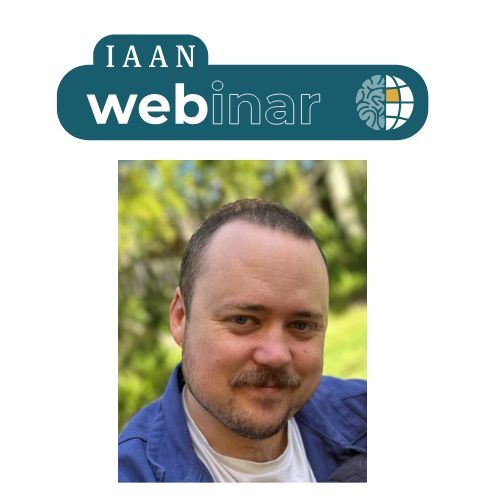
Richard Hill - A man wearing glasses and a black shirt is smiling for the camera.
December 18, 2025
This presentation explores all those possibilities and presents a series of conclusions that point to a discernible “curiosity network” in the brain.
meet up logo
By Jan Sky November 17, 2025
Presented by the IAAN Board
male speaker
September 30, 2025
Neuroscience, Psychotherapy, and Attachment-Informed EMDR (ai-EMDR): An Online Exploration - What do journalism, neuroscience and psychotherapy have in common? Having lived all three, Mark Brayne suggests that attachment-informed EMDR offers a game-changing answer. On November 15th you’re invited to join BBC Foreign Correspondent-turnedEMDR therapist Mark Brayne for a two-hour webinar exploring the living interface between brain science and psychotherapy — and how attachment-informed EMDR (aiEMDR) might open new doors in the work of emotional healing. EMDR is well established as a treatment for trauma. But what happens when we view it through the lens of applied neuroscience and attachment theory? How do past survival strategies, the nervous system’s ways of managing safety, and, speaking with Carl Jung, mankind’s collective unconscious — those cross-cultural patterns in dreams and symbol — show up in the therapy room, and how might they be reshaped in the present moment? Mark brings both stories and slides, but rather than a formal lecture, the session will be a space of live exploration, using examples that emerge in dialogue and considering how symbolic processes, embodied memory, and relational presence can shift the nervous system’s deepest patterns. If you’re curious about where neuroscience and psychotherapy truly meet in practice — and what this could mean for both research and clinical work — join us for what promises to be a warm, thoughtful, and possibly game-changing conversation.