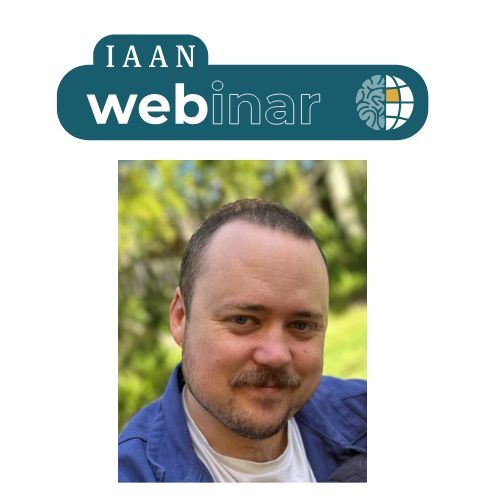
Dr Mary Bowles – Doctor of Psychology
Topic: Love, Lies & Limbic Systems: What Neuroscience Actually Says About Our Relationships
Presentation
Much of what our culture teaches us about relationships — who feels what, how love works, who is a good or bad partner, what makes a good parent, when to trust your instincts — is too often built on oversimplifications that neuroscience can now address directly. These normalized beliefs shape how we behave in romantic and family relationships, often creating conflict, shame, and disconnection that feels personal but are actually cultural.
In this webinar, participants will examine widely held relationship assumptions through the lens of contemporary neuroscience — including emotion science, attachment and bonding research, parental brain plasticity, predictive processing, epigenetics, and social perception. Each section pairs a familiar cultural script with the neuroscience that complicates or contradicts it, then translates the science into practical implications for how we relate to partners, children, and ourselves.
Topics span gender and emotion, romantic attachment, parenting roles and same-sex family outcomes, the neuroscience of intuition and its limits, how adverse experiences reshape the brain's prediction systems, genetic inheritance, and gendered domestic expectations. The webinar is grounded in peer-reviewed research and features interactive polls, guided reflections, and discussion prompts designed to help attendees recognize inherited scripts and replace them with more accurate, flexible models of human connection.
Participants will leave with a working understanding of how the brain actually processes emotion, bonding, caregiving, and threat detection — and how that understanding can reduce preventable conflict across every type of relationship.
LEARNING OBJECTIVES
Upon completion of this webinar, participants will be able to:
- Explain how neuroscience defines emotion as a universal, multi-component process and identify how gendered cultural narratives about emotions create harm in romantic, married, and parent–child relationships.
- Describe the neuroscience of attachment and pair bonding, and evaluate how cultural myths about love and commitment become self-fulfilling in both heterosexual and same-sex relationships.
- Analyze research on parental brain plasticity to challenge assumptions about caregiving roles, including evidence on same-sex parent outcomes and experience-dependent neural development.
- Apply predictive processing and interoception frameworks to critically evaluate the role of intuition in relationship decision-making.
- Evaluate how adverse and traumatic experiences alter the brain's threat detection, safety learning, and reward systems — and how these changes manifest in relationship patterns.
- Differentiate between cultural assumptions about genetic inheritance and the actual neuroscience of gene expression, epigenetics, and developmental individuality.
- Identify how socialized expectations — rather than biological differences — drive common relationship conflicts around domestic labor and standards of care.
A Webinar not to be missed!
Saturday 22 August 2026 from 10 am - 12 noon AEST
Dr. Mary Bowles is a Doctor of Psychology, Marriage and Family Therapist, credentialed Family Mediator and Arbitrator, and a Relationship and Trauma Coach with expertise in applied neuroscience. As a systems focused clinician, she has an affinity for the neuroscience of relationships, and her specific research focus is on applied memory reconsolidation directed toward rapid, sustainable, and non- and minimal-exposure driven treatments for trauma, anxiety, and stress. Dr. Bowles has been an active member of the IAAN since 2015, serving originally as a support coordinator for Dr. Pieter Rossouw, as an IAAN board member, and as an IAAN Supervisor until 2026. Dr. Bowles has been in private practice since 2012 and her primary clinical focus is in treating couples, children, high-conflict co-parents, blended families, divorce recovery and repair, adult and childhood trauma, parenting, ADHD, and on de-pathologizing approaches to mental health.
Register your spot now!

Other articles that may interest you